The annual fee test: the math I run before I renew any credit card
A $95 card isn't a $95 decision. It's a comparison against the free card you could have used instead.
Most annual-fee math compares a paid card to nothing. That's the wrong baseline. Compare it to a free 2% card and the break-even moves by thousands — and for one common habit, by a factor of four.
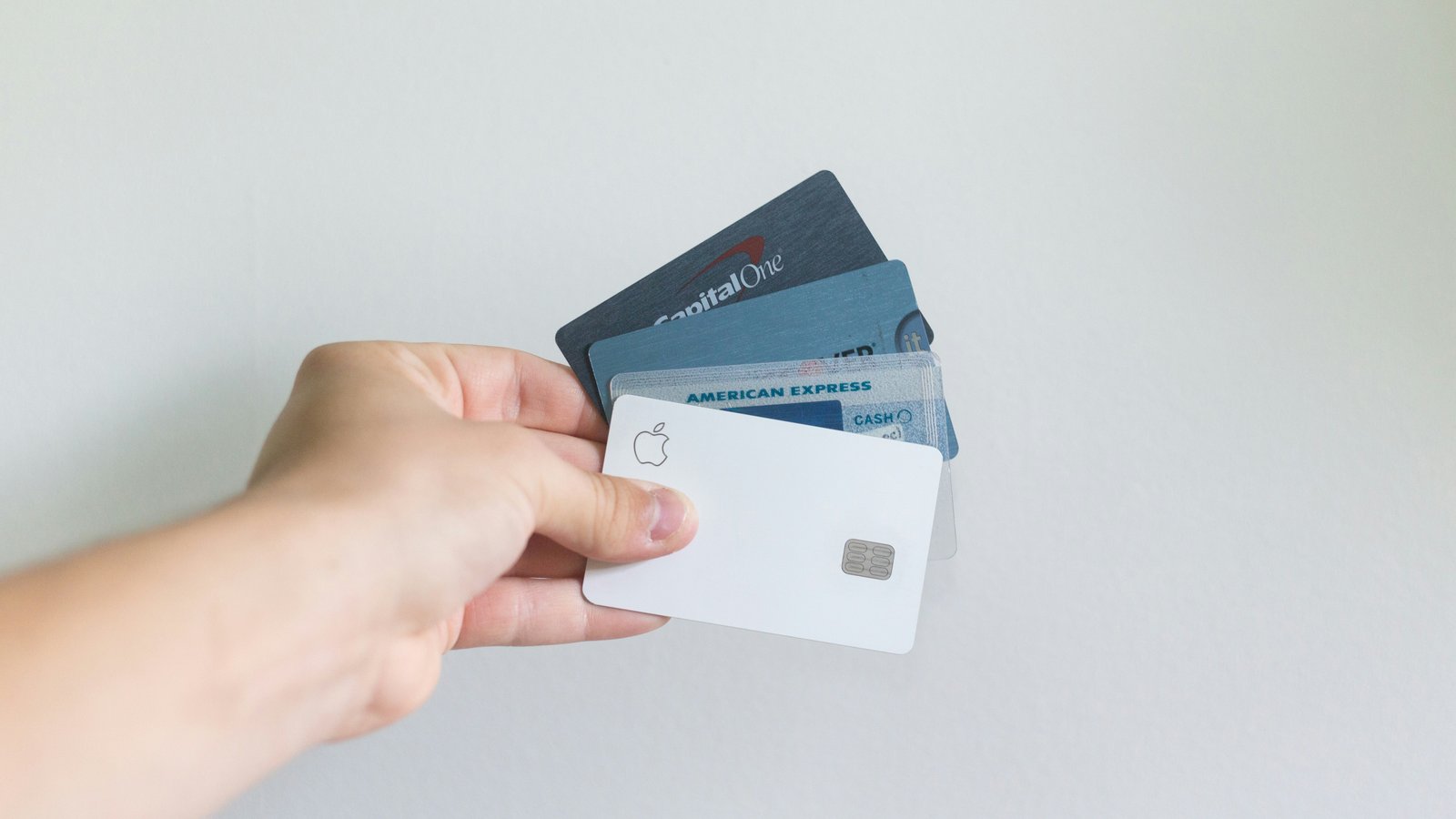
The annual fee posts to your statement once a year, and most people look at it, shrug, and keep the card. That shrug is usually a mistake in one direction or the other — either you’re paying $95 for nothing, or you’re about to cancel a card that’s quietly earning you $400.
The arithmetic that settles it takes about five minutes. Here it is.
The mistake almost everyone makes
Ask someone whether their $95 card is worth it and they’ll add up the rewards it earned — say $380 in points — compare it to $95, and conclude they’re up $285.
That math is wrong, and it’s wrong in an expensive way.
You wouldn’t have earned zero on that spending. If you’d put all of it on a free flat-rate 2% card — a Citi Double Cash, a Wells Fargo Active Cash, a Fidelity Rewards, any of them, no annual fee — you’d have earned something. That’s your baseline. The paid card has to beat that, not beat nothing.
So the real question isn’t “did this card earn more than $95.” It’s:
Did this card earn more than a free 2% card would have, by more than $95?
Once you frame it that way, a lot of annual-fee cards stop looking clever.
The formula
Three numbers:
- Your edge per dollar — the card’s earn rate minus 2%, in each spending category.
- Your actual spend in each of those categories.
- Credits you genuinely used — more on that trap below.
Keep the card if:
(edge × spend) + credits actually used > annual fee
The whole game is in that first term, because the edge can be negative.
Worked example: a $95 travel card
Take the Chase Sapphire Preferred I’ve written about — $95 fee, 3x on dining, online groceries, streaming, gas and EV charging, 2x on travel, 1x on everything else.
Against a free 2% card, at a conservative 1 cent per point (the guaranteed cash-out floor):
| Spending | Card earns | 2% card earns | Your edge |
|---|---|---|---|
| Dining, groceries, streaming, gas (3x) | 3% | 2% | +1% |
| Travel (2x) | 2% | 2% | 0% |
| Everything else (1x) | 1% | 2% | −1% |
Read that bottom row again. On general spending, the paid card is worse than the free one. Every dollar of non-bonus spend you run through it costs you a penny versus the card you could have used for free. The annual fee isn’t the only thing you’re paying.
At a +1% edge, covering a $95 fee takes:
$95 ÷ 0.01 = $9,500 a year in bonus categories — about $792 a month on dining, online groceries, streaming and gas combined.
That is a lot. Most households don’t clear it.
The number that changes everything
Here’s where it gets interesting, and it’s the part generic card reviews skip.
That $9,500 assumes you cash your points out at 1 cent. If you transfer them to airline partners and use them well, the same points are worth closer to 2 cents. Now:
| Points at 1¢ | Points at 2¢ | |
|---|---|---|
| 3x category earns | 3% | 6% |
| Edge over a 2% card | +1% | +4% |
| Spend needed to clear $95 | $9,500 | $2,375 |
$9,500 versus $2,375. Same card, same fee, same spending. The only variable is whether you actually transfer points or let them sit and cash out.
So the honest answer to “is this card worth the fee” is a question back: have you ever actually transferred points and booked an award flight? If yes, the card probably pays for itself on $198 a month of dining and groceries. If you’ve been meaning to for two years and haven’t, run the 1-cent number, because that’s the one that describes you.
Be skeptical of your own intentions here. I’d rather you use the pessimistic number and be pleasantly surprised than the optimistic one and quietly lose $95 a year to a plan you never execute.
The credits trap
Cards justify their fees with credits — $100 hotel credit, $120 Global Entry, streaming credits, food delivery credits.
A credit is only worth what you’d have spent anyway.
A $100 hotel credit that requires booking through the card’s own travel portal is worth $100 if you were going to book that hotel regardless, at a price the portal actually matches. If it nudges you into a $400 booking you weren’t planning, the credit didn’t save you $100 — it cost you $300.
Two rules I’d apply:
- Count a credit at zero unless you used it last year. Not “could have.” Used.
- Amortize the multi-year ones. A $120 Global Entry credit you can use once every four years is $30 a year, not $120.
Run the fee math with credits valued honestly and a surprising number of “the credits pay for the fee” cards stop clearing the bar.
If it fails the test: downgrade, don’t cancel
Say you run the numbers and the card loses. Cancelling is the obvious move and usually the wrong one.
Closing a card raises your credit utilization immediately. Utilization is roughly 30% of your score, and it’s calculated on the credit you have available. Close a card with a $12,000 limit and that $12,000 vanishes from the denominator — if you carry any balance anywhere, your utilization ratio jumps overnight even though you didn’t borrow another dollar.
The length-of-history hit is less dramatic than people fear: a card closed in good standing stays on your credit report for up to 10 years and keeps contributing to your length of credit history during that time. The damage is deferred, not immediate. But deferred damage on a card you opened in your twenties is still damage.
The better move is a product change. Most issuers will convert a fee card into a no-fee card in the same family — you keep the same account, the same open date, the same credit line, and there’s no hard inquiry. The fee stops, the account age survives, your utilization denominator stays intact.
Two asterisks worth knowing before you call:
- You generally can’t earn a new welcome bonus on a card you downgraded into, and some bonuses are once-per-lifetime regardless.
- Do it before the fee posts, or at least inside the window where the issuer will still refund it — usually 30 days, sometimes longer. Call and ask; they’ll tell you.
The five-minute checklist
- Pull last year’s statements and total your spend in the card’s bonus categories only.
- Multiply by the edge over 2% — the card’s rate minus 2%, at a point value you’ll honestly realize.
- Add credits you actually used last year, with multi-year ones amortized.
- Subtract the annual fee.
- Positive → keep it. Negative → call and ask for a product change to the no-fee version.
And whatever the answer: stop running non-bonus spending through it. That’s the free 1% you’ve been handing back without noticing, and fixing it costs nothing.
The same lens works on any recurring fee — it’s the Costco Executive break-even with different numbers. Annual charges are the easiest money in a budget to leave on autopilot, and the only defense is to make yourself re-earn them once a year.
Earn rates, credits and fees change, and the ones above reflect a common $95 travel card as of publication — check your own card’s current terms rather than trusting a blog post’s table. Point valuations are estimates and depend entirely on how you redeem. Credit score mechanics are general; your own report may behave differently. My math, not advice for your wallet.
*** THE NUMBERS ***
- Typical annual fee $95
- Break-even if you cash out points $9,500 / yr
- Break-even if you transfer points $2,375 / yr
- What the card costs you on non-bonus spend −1%
Hebojago is for information only and is not investment, tax, or legal advice. Rates and offers change — verify terms with the provider before acting.
*** GUESTBOOK / COMMENTS ***
MORE IN CREDIT CARDS
 FIG. 06
Chase Sapphire Preferred just hit 100,000 points — the offer I'd tell my best friend about
The card in my own wallet, at its best-ever bonus. But read the fine print with me first.
The Chase Sapphire Preferred's sign-up bonus is at 100,000 points — worth $1,000 minimum and $2,000+ if you transfer well. Here's the full math, the new 2026 benefits, and who actually qualifies.
Disclosure: I’m a Chase Sapphire Preferred cardholder, and the link below is my personal referral link — if you’re approved through it, Chase gives me bonus points at no cost to you. That’s a real incentive, so read this with your skeptic hat on. This is my experience and my math, not financial advice. Offer terms change — verify the current offer on Chase’s site before applying.
I’m currently using the Chase Sapphire Preferred, and I don’t say this often about credit cards: you cannot miss this offer.
Right now the sign-up bonus is 100,000 Ultimate Rewards points — the highest this card has ever offered, and only the third time in its 16-year history it’s been this high. The annual fee? Still just $95.
What 100,000 points is actually worth
Here’s where it gets fun, because 100K points has three levels of value depending on how you use them:
Level 1 — cash. 1 point = 1 cent as a statement credit or a check by mail. So 100,000 points = $1,000 cash, minimum, guaranteed. Even if you never want to think about points again, you clear $905 after the annual fee in year one. Find me another sub-$100 card that does that.
Level 2 — the Chase Travel portal. Book travel through Chase’s portal and eligible bookings with the Points Boost feature can stretch your points to up to 1.75 cents each — that’s up to $1,750 of travel from this one bonus.
Level 3 — transfer partners. This is where points people live. You can transfer Ultimate Rewards 1:1 to airlines like United, Air Canada, Virgin Atlantic, Southwest and more. Used well on award flights, The Points Guy currently values 100K Chase points at around $2,050. In practical terms: this single bonus can cover about 3 economy flights, or with the right transfer, a business-class seat to Europe.
One honest asterisk on transfers: as of the 2026 refresh, Hyatt is no longer 1:1 — it’s now 4:3 (1,000 points → 750 Hyatt points). The airline partners stay 1:1. And the old 10% anniversary point bonus is gone. I’d rather tell you the downgrades myself than have you find them later.
The catch (there’s always a catch)
To earn the 100K, you must spend $5,000 in the first 3 months. That’s about $1,667/month — for a family, groceries + gas + insurance + the normal bills usually gets there without trying.
But let me put on my money-blogger hat and say the part the glossy card ads never do:
Only spend money you were going to spend anyway. If you have to manufacture $5,000 of spending you don’t need, the “free” $1,000 just cost you $5,000.
And never, ever carry a balance for points. This card’s interest rate will run north of 20% APR. One year of carrying a $5,000 balance burns roughly the entire bonus. Rewards cards are only rewarding if you pay in full every month — that’s the whole game.
The other benefits (this card got a big upgrade in 2026)
The sign-up bonus alone beats the $95 fee, but the refreshed benefits stack on top:
- $100 hotel credit every year through Chase Travel — doubled from $50 last year. This alone can offset the annual fee with a single booking.
- $120 credit for Global Entry, TSA PreCheck or NEXUS when you apply — new to this card, once every four years. If you’ve been putting off Global Entry, the card just bought it for you.
- 1 year of Apple TV free (worth up to ~$156) — but you must activate by December 31, 2026. Hurry!
- DoorDash DashPass membership — a $120/year value, 12 months complimentary when you activate.
- Plus the earning rates: 3x on dining, online groceries, streaming — and new for 2026, 3x on gas, EV charging, and vacation rentals like Airbnb and Vrbo.
Add it up: $1,000 minimum bonus + $100 hotel + $120 Global Entry + $156 Apple TV + $120 DashPass against a $95 fee. The math isn’t close.
Who can actually get this (read before you apply)
Two rules matter, and skipping them is how people waste a credit application:
1. The bonus is once in a lifetime. T_T sad. If you’ve ever earned a Sapphire Preferred welcome bonus before, you’re not eligible again — Chase tightened this from the old 48-month rule. Which is exactly why, if you don’t have this card in your wallet, this is the moment you should get it — at the biggest bonus it’s ever had, not at the standard 75K.
2. The 5/24 rule. Chase generally denies applicants who’ve opened 5 or more credit cards (from any bank) in the past 24 months. Count yours before applying — a denial still costs you a hard credit pull.
Also: you’ll want a good-to-excellent credit score — realistically 700+ for comfortable approval odds, and below 670 probably won’t make it.
Don’t sleep on this one
Chase hasn’t said when the offer ends, but history says these elevated bonuses don’t stick around — the last 100K promotion lasted about six weeks, and this one has already been live for about four. If you’re eligible and this card fits your life, waiting is the expensive choice.
If you use my link above, thank you — it supports this site at no cost to you. Either way: pay it in full every month, use the credits, and let the points fund the trip instead of the bank.
Offer details verified July 14, 2026 and subject to change — always confirm the current bonus and terms on Chase’s application page before applying. Credit card content is opinion based on my own use; your approval odds and results depend on your credit profile.
- Sign-up bonus (limited time)
75,000 pts100,000 pts - Spend requirement $5,000 / 3 mo
- Annual fee $95
- Bonus value (cash → transfers) $1,000–$2,000+
 FIG. 13
Should I Pay Off 0% APR Credit Card Debt or Invest? I Tried Investing for 11 Months — Here's Why I'm Stopping
I had 21 months of free money. I used 11 of them badly.
I moved my credit card debt to a 0% APR card and invested the payments instead. With 10 months left I'm switching to a boring savings account — and pulling the real statement showed me that most of what I owe isn't the debt I rescued at all.
Let me start with the confession, because everything else follows from it.
I spent too much. I put everything on the credit card — I mean everything — and at some point the balance stopped being a number I was managing and started being a number that was managing me. Chase and Amex were charging me somewhere in the 23–26% range. That is not a debt you outrun by being clever. That is a debt that compounds against you while you sleep.
So I did the thing the internet tells you to do: I opened a U.S. Bank card with a 0% intro APR promotion — 21 billing cycles on balance transfers and purchases — and moved everything over. The interest charges stopped. My required payment dropped to about $100 a month.
And then I had an idea that felt, at the time, like the smartest idea I’d ever had.
The idea: borrow at 0%, invest the difference
The logic is genuinely sound on paper. If I’m not paying interest for 21 months, then every dollar I don’t send to the card is a dollar I can put in the market for 21 months. Pay the $100 minimum, invest the rest, and at the end of the promo I sell enough stock to clear the balance and keep the gains.
Free leverage. That’s what it is. That’s what everybody calls it.
I ran that plan for 11 months. NVDA, TSLA, SPCX, AVGO — the stuff I actually believe in.
Then I looked at my statement.
The part where it hit my heart
When I realized I only had 10 months left to pay off the debt, it hit my heart.
I had totally forgotten about this debt. It was 0% interest — no interest, and only a small minimum payment going out every month. It stopped registering as a problem. And when I saw the promotion ending date, it became real: I actually need to pay this off.
That’s the first thing nobody tells you about a 0% card. It doesn’t just pause the interest. It pauses your attention. Debt that hurts gets dealt with. Debt that doesn’t hurt gets forgotten, and then it shows up eleven months later with a deadline attached.
Then I actually read the statement, and found the cruise
Here’s what the balance breakdown looks like. This is my real statement, not an example.

| Balance type | Amount | APR | Expires |
|---|---|---|---|
| Balance transfer #1 | $1,097.00 | 0.00% | 06/2027 |
| Balance transfer #2 | $1,115.00 | 0.00% | 06/2027 |
| Purchases | $2,993.33 | 0.00% | 06/2027 |
| Cash advances | $0.00 | 30.49% (variable) | — |
| Total | $5,205.33 |
Look at the third row.
I’d been describing this in my head as “my old credit card debt.” It isn’t. The debt I actually rescued — the Chase and Amex balances I transferred over — comes to $2,212. The purchases line is $2,993.33.
That’s a family cruise.
It’s not mystery spending, and I’m not about to pretend I don’t know where it went. It’s my wife, my kids, a ship, and a week together. The 0% promotion covered purchases as well as transfers, so that trip charged me exactly zero dollars in interest. On the day I booked it, that felt like the system working precisely as designed. Free money, remember.
Here’s what it actually cost me, and it took until this month to see it.
Without the cruise, I’d owe $2,212 right now. Ten months of minimum payments already knocks $1,000 off that — I’d be looking at a $1,212 balance and a completely boring finish. There would be no sinking fund. There would be no arithmetic about whether I have to sell NVDA. There would be no article.
The cruise didn’t cost me interest. It cost me runway.
That’s the part of a 0% purchase window nobody explains. It doesn’t charge you for the purchase — it charges you for the deadline. I opened that card to do one job, kill high-interest debt, and then attached an optional expense to the same clock. The clock doesn’t distinguish between the debt that scared me and the vacation that didn’t. It just counts down.
So the honest accounting isn’t “I overspent.” It’s this: I turned a $2,212 problem into a $5,205 problem, and I didn’t feel it happen, because the line item that made it happen came with a 0.00% next to it.
If you have one of these cards, go pull your balance-by-type table right now. Not your total — the breakdown. I’d bet a lot of people find a version of my cruise sitting in there.
Why I won’t just sell the stocks
The obvious move is to sell $5,200 of stock tomorrow and be done with it. I’m not doing that, and I want to be honest about the reason rather than dress it up in strategy language.
NVDA, Tesla, SPCX and the rest still have the potential to grow much higher. If I sell, I’m missing out on that gain.
That’s FOMO. That’s the whole reason. I’m not going to pretend it’s a tax-optimization decision or a conviction thesis — it’s the fear of watching something I sold keep going up without me.
And here’s the uncomfortable follow-on: I genuinely don’t know how much I’ve made. My portfolio keeps getting invested into, and I don’t know exactly what my gain is on the stocks I’ve bought. It’s just hard to check because I buy and sell.
Sit with that for a second, because I had to. I ran an arbitrage for eleven months without measuring it. I borrowed money at what I thought was 0% and invested it, and I cannot tell you today whether that trade made or lost money. If the whole point of a strategy is the spread, and you never calculate the spread, you weren’t running a strategy. You were running a vibe.
What changed my mind
It was the shrinking number of months — but also this: the credit card debt isn’t going down anytime soon if I’m just paying the minimum.
That’s the trap. $100 a month against $5,205 is $1,000 over ten months. At the end of the promo I’d still owe more than $4,200, and I’d be selling stock into whatever the market happened to be doing that week. Not the week I chose. The week the bank chose for me.
The number that made this obvious: SPCX
I own SPCX. Here’s what it did while I was calmly not thinking about my debt.
SpaceX went public in June. It hit its all-time high three days after the IPO, then corrected roughly 50% over the following month — closing at an all-time low of $108.27 on August 6, below its $135 IPO price. As I write this it has clawed back above $135 for the first time in weeks.
Now imagine my promo had ended on August 6 instead of ten months from now. I’d have been selling a position down 50% to pay a credit card bill. Not because the thesis broke. Because the calendar said so.
That’s the whole argument in one ticker. A deadline turns a good bet into a bad one, not by changing the odds, but by removing your ability to wait.
The asymmetry, in actual numbers
Here’s what I’m choosing between over the next 10 months. These are illustrative — I’m not forecasting anything.
If I keep investing the money:
- Market cooperates (say +10% annualized): dollar-cost averaging means my average dollar is only invested about five months, so I’m looking at roughly +$200.
- Market doesn’t cooperate (a 20% drawdown lands on my deadline): roughly −$1,000, and I still owe the $5,205.
- And my portfolio isn’t an index fund. It’s concentrated in NVDA, TSLA, SPCX, AVGO — same expected return as the market, maybe, but two or three times the swing. SPCX just showed you what that looks like.
If the money doesn’t arrive in time:
This is where I have to admit something I didn’t know until I went looking. My statement does not tell me what my rate becomes in July 2027. Every promotional bucket prints as 0.00%, and the only non-promotional rate on the whole page is 30.49% variable on cash advances — a bucket I’ve never used.
So I don’t actually know my go-to APR. Neither do you, probably. It’s in the cardholder agreement, not the statement, and it’s worth a phone call. But if it lands anywhere near this card’s other rates, we’re talking roughly 25–30% on a $4,200 balance — call it $1,050 to $1,260 a year, starting the month the promo dies.
Upside around $200. Downside north of $1,000. That’s not free leverage. That’s picking up nickels with a deadline standing behind me.
The new plan: a sinking fund, and the number I got wrong
Starting this month, money goes out in two directions:
- $100 to the card — the minimum, non-negotiable. Never skip this. A missed payment is how issuers can legally end your promo early, and that’s the four-figure scenario.
- $420 into Apple Savings at 3.40% APY — earmarked strictly for this debt. Not vacation money. Not dip-buying money. Payoff money.
My original plan was $400. Then I did the arithmetic against the real balance instead of my rounded guess:
| Amount | |
|---|---|
| Owed at deadline ($5,205.33 − $1,000 in minimums) | $4,205 |
| Savings at $400/month × 10 | ~$4,051 |
| Shortfall | −$154 |
| Savings at $420/month × 10 | $4,253 |
| Cushion | +$48 |
A hundred and fifty dollars short, purely because I’d been planning against “about $5,000” instead of $5,205.33. Rounding down is how sinking funds fail. Use the statement number.
The best part isn’t the interest, though. It’s that the sinking fund funds the payoff from new cash flow, so the stocks never have to be sold. The FOMO problem doesn’t get solved by willpower. It gets solved by making the sale unnecessary.
No hype, just math: the interest is small and I’m going to say so
Ten months of $420 deposits at 3.40% APY earns about $53 if I deposit at month-end, about $65 if I deposit at month-start. Call it $55.
Then Uncle Sam takes a cut, because HYSA interest is ordinary income. At a 22–24% federal bracket — and no state income tax here in Washington — I keep roughly $42.
Forty-two dollars. For ten months of discipline.
I’m not going to inflate that. A finance blogger who tells you $42 is life-changing is selling you something. What I will say is that $42 is free and certain, versus a coin flip that might pay $200 and might cost $1,000. When the downside is five times the upside, taking the small sure thing isn’t timid. It’s just correct.
The thing I got wrong from day one: my 0% was never 0%
This is the part I most want you to take away.
My balance transfers carried a 3% fee. That fee got added to the balance on day one and I stopped thinking about it, the same way I stopped thinking about the debt.
But 3% paid up front for 21 billing cycles — on a balance I barely paid down — works out to roughly 1.7% annualized. That’s the real cost of my “free” loan.
So the actual spread I’ve been earning in Apple Savings isn’t 3.4%. It’s about 1.7%. Half of what it looks like.
One nuance worth understanding: that fee is sunk. Looking forward from today, my marginal borrowing cost genuinely is 0%, so the fee shouldn’t influence what I do next — 3.4% beats 0% and the sinking fund wins. But looking backward, it means the arbitrage was never as free as the pitch. Both things are true, and most articles about this only tell you one of them.
If you’re shopping these cards, the transfer fee is the price of the loan. A 5% fee — which is what U.S. Bank currently advertises on its Shield Visa — pushes the effective cost to roughly 3–6% annualized depending on how fast you pay it down. At that point a 3.4% savings account isn’t arbitrage. It’s a rounding error.
Honest downsides of my own plan
I’d rather you hear these from me.
- $42 is not a strategy. It’s a rounding error on my grocery bill. The value here is risk elimination, not yield.
- I’m probably leaving about $20 on the table. Top high-yield accounts are running around 4.20–4.50% APY as of early August 2026, versus Apple’s 3.40%. Over 10 months on this balance that’s roughly $20 more. I’m staying put because it’s in my Wallet app and friction is the enemy of any plan I have to execute ten times in a row. That’s a real trade-off and you might make it differently.
- Apple Savings is mid-transition. Goldman Sachs is handing the Apple Card program and the associated savings accounts to Chase over roughly 24 months, announced January 2026. Early reporting suggested existing Goldman savings holders may not be moved automatically. My entire 10-month window sits inside that transition. It’s not a reason to avoid it — the money is FDIC-insured either way — but when money has a hard deadline on it, “my bank is changing hands” belongs on the list.
- Apple’s rate has only gone one direction. It launched at 4.15% in 2023 and has been cut repeatedly, most recently from 3.50% to 3.40% in June 2026. It’s variable. My $53 could become $45.
- I still don’t know my go-to APR. I’m planning around an estimate. That’s a gap in my own homework and I’m fixing it with a phone call this week.
- If your promo has a deferred-interest structure, none of this applies. Some store cards retroactively charge all the interest you “saved” if any balance remains. Mine doesn’t appear to. Read yours.
- This only works if the purchases line stops growing. A sinking fund next to a card you’re still charging to is just a savings account with extra steps. My $2,993.33 is proof that a single interest-free decision can more than double the size of the problem.
What I’d tell someone in month one
If I could go back and talk to myself the day that balance transfer cleared:
- Calculate the transfer fee as an interest rate. Divide it by the promo length in years. That’s your real APR. Write it on the statement.
- Give the rescue card one job. The 0% purchase window is not a bonus feature — it’s the same deadline, wearing a different hat. If a card exists to kill old debt, optional purchases don’t belong on it, no matter how interest-free they look. Book the trip. Just book it somewhere that isn’t sharing a countdown with your debt. This is the single biggest thing I got wrong.
- Set the payoff plan before you set the investing plan. Not after. The payoff is the obligation; the investing is the optional part.
- Plan against the statement number, not a round number. My $200 rounding error would have been a $150 shortfall on deadline day.
- Find out your go-to APR before you need it. It’s not on your statement. It’s the entire downside of the trade.
- Never let a 0% balance leave your attention. Put the promo end date in your calendar with a six-month warning. The absence of pain is not the absence of a problem.
- If you’re going to run the arbitrage, measure it monthly. An arbitrage you don’t measure isn’t an arbitrage.
- Don’t borrow on a deadline to buy concentrated positions. If I’d put that money in VOO instead of four high-beta names, the deadline risk would be a fraction of what it is. I didn’t. That’s on me. This is the same tension I wrote about in my custodial accounts post — I’m buying boring index funds for my kids while running a concentrated book for myself. I’m aware of the contradiction. I’m keeping it in print so it stays uncomfortable.
I’ll report back
When the promotional rate ends, I want to see how much I gained from putting the money into the HYSA — and whether it was a smart decision or just minimal impact.
My honest guess: minimal impact on the interest line, meaningful impact on the “did I have to sell NVDA at a bad price” line. But I’ve been wrong before, publicly — I was wrong about my own balance by $200 in the first draft of this very article — and I’ll post the real numbers either way.
Ten months. $420 a month. One statement screenshot at the end, showing $0.00.
See you at $millions$ — eventually, and slower than I’d like.
Balances and dates above are from my own U.S. Bank statement as of August 2026; APYs, prices and card terms verified August 11, 2026 and subject to change. Confirm your own promotional end date, go-to APR and transfer fee directly with your issuer — the go-to rate is in your cardholder agreement, not on your statement. This is my personal experience and my own math, not financial advice. I’m a software developer who trades on the side, not a licensed advisor. Investment returns shown are illustrative, not forecasts, and I can lose money on every position named here.
- Balance left on the 0% card $5,205.33
- Of that, debt I actually transferred $2,212.00
- Of that, our family cruise $2,993.33
- Billing cycles remaining
2110 - New monthly plan
$100 card + $400 stocks$100 card + $420 savings - Apple Savings APY
4.15%3.40% - Interest I'll actually earn ~$53
- Real cost of my '0%' loan
0%~1.7%/yr